
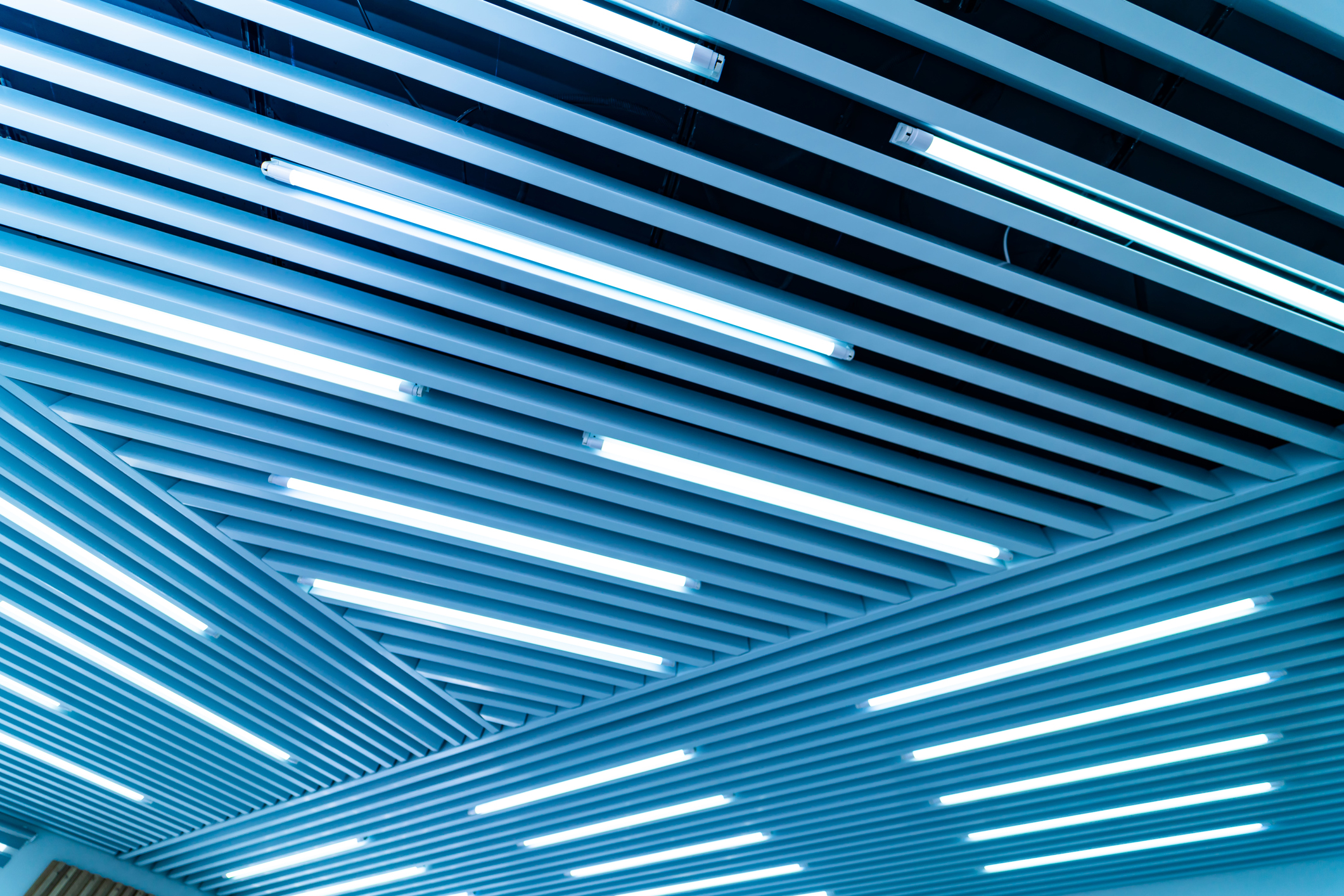
The global phase-out of fluorescent lighting is having significant implications for building owners and tenants. Under the Minamata Convention on Mercury, countries are progressively restricting fluorescent lamps with many commonly-used types being phased out by 2027. While existing lighting can remain in use, replacement lamps are becoming increasingly difficult to source.
For buildings that rely on fluorescent lighting, owners and occupiers are recommended to have a LED replacement strategy ready by 2027. Decisions about replacement technologies, costs, lease responsibilities and the timing of upgrades all need to be addressed.
Planning early provides an opportunity to assess the available replacement options and develop an approach suited to the building’s needs, budget and operational requirements. It also allows upgrades to be coordinated with refurbishment and asset management programs to manage cost and disruption.
A like-for-like replacement may not be straightforward
Fluorescent lamps have been widely used in commercial buildings, particularly in recessed ceiling lights. While LED alternatives are available, replacing a fluorescent lamp isn’t as simple as installing a new one. Even where a replacement fits an existing fitting, its lighting performance, compatibility and electrical safety need to be considered.
Considerations when replacing fluorescent lights
- Lighting levels: LED replacements may produce less light than the fluorescent lamps they replace, potentially affecting task visibility.
- Glare and visual comfort: Unlike fluorescent lamps, which distribute light in multiple directions, many LED replacements have more directional light output. This can increase glare.
- Light distribution and uniformity: Changes in how light is distributed within existing troffers can create uneven illumination and dark spots across a pace.
- Energy efficiency: Replacement products vary in efficiency and may not deliver the anticipated energy savings. This could impact a NABERS rating.
- Lighting performance verification: Photometric data may not be available for the combination of an existing light with a replacement LED lamp, making it difficult to verify performance without modelling or testing.
- Electrical safety and compliance: Compatibility with existing control gear, insulation requirements and any modifications to the light must be assessed against relevant standards.
- Material use and waste: Replacing complete lights can involve disposing of serviceable components. Where technically suitable, retaining or remanufacturing existing fittings may reduce material consumption and waste.
Lighting replacement options
There are 3 broad approaches to replacing fluorescent lighting. The most appropriate solution depends on the condition of the existing installation, the building’s requirements and the budget and timeframe.
1. Replacement of lamp and fitting
A full replacement would include replacing conventional lighting with new LED systems. This may be appropriate where existing fittings are no longer suitable or where a new lighting system would better meet the building’s operational, energy efficiency or design requirements.
2. Replacement of lamp and modification of fitting
A part replacement would adapt existing fittings to accommodate new LED lamps, retaining as much of the existing infrastructure as practical. This can help preserve architectural features, reduce material waste and limit disruption where existing fittings are suitable for modification.
3. Upgrade of lamp only
In theory, the simplest approach would be to replace conventional lamps with compatible LED alternatives where technically viable. While this may appear straightforward, lighting performance, product compatibility, electrical safety and ongoing maintenance requirements need careful consideration.
No single approach will suit every building. In some cases, a combination may be appropriate. Assessing the existing installation and understanding an owner or occupier’s priorities is essential to identifying a solution that balances lighting quality, safety, cost, sustainability and operational requirements.
Finding the right approach for your fluorescent lighting
We’re working with clients across commercial and government buildings to assess their existing fluorescent lighting and plan the transition to LED technology.
Our work includes exploring opportunities to retain and modify existing lighting infrastructure during office refurbishments as well as assessing replacement options and potential staging strategies for operational facilities.
Each building presents different challenges. By considering the condition of existing fittings alongside lighting performance, sustainability objectives, operational requirements and budgets, we help building owners and occupiers identify an appropriate approach to upgrading their lighting.
Who’s responsible for upgrading the lighting?
In leased commercial buildings, the distinction between base-building infrastructure and tenant-maintained components adds complexity. The physical luminaire (or fitting) is commonly treated as a base-building asset while replaceable components, such as lamps, may be maintained by the tenant.
As fluorescent lamps become unavailable, questions can arise about who’s responsible for replacing lighting infrastructure that remains physically serviceable but can no longer be maintained using its original components. This depends on lease arrangements, the condition of the installation and whether the tenant has modified the original lighting system.
For owners and occupiers, early discussions are essential. Lease renewals, tenancy changes and planned fitouts provide opportunities to clarify responsibilities and agree on an approach to lighting upgrades before maintenance becomes an issue.
For owner-occupied and government facilities, the challenge may about securing funding, prioritising works and maintaining operations throughout the transition.
Planning a staged transition
The starting point is understanding the existing installation: identifying lamp types and quantities, assessing the condition of lights, reviewing replacement availability and establishing which areas present the greatest maintenance or operational risks.
This assessment helps determine whether existing lighting can be upgraded or modified, where complete replacement may be necessary and whether a combination of approaches would best suit the building. It also informs how works can be staged around operational requirements, budgets and planned refurbishments.
From there, a transition strategy can consider:
- suitable replacement options which verify lighting quality, safety and compliance
- prioritisation of critical areas and scheduling of works to minimise disruption
- capital expenditure and budgeting
- coordination of upgrades with end-of-life replacement, refurbishments and other works
- assessment of whether existing lights can be retained or remanufactured
- alignment of upgrades with lease renewals, fitouts and changes in occupancy.
Considering long-term building performance
While the fluorescent lighting phase-out is a maintenance and replacement challenge, it also creates an opportunity to review lighting performance. A well-designed LED upgrade can improve energy efficiency, reduce maintenance requirements and provide opportunities to introduce more responsive lighting controls.
Lighting quality directly affects building users. Appropriate illumination, glare control and uniformity support visual comfort and the ability to carry out tasks effectively.
For building owners, the longer-term considerations include operating costs, maintenance access, replacement flexibility, embodied and operational carbon and the ability of the lighting system to accommodate future changes in building use. These factors should inform the replacement strategy alongside initial capital cost.
Plan now before replacement becomes urgent
Whether the right approach is to upgrade existing lamps, modify fittings or install new lighting systems, the decision needs to be informed by the building’s condition, performance requirements, budget and timeframe.
A lighting specialist can help building owners and occupiers assess their existing lighting, understand the available options and develop a practical transition strategy that considers lighting quality and long-term building performance.